How to Choose Energy-Efficient Windows in NC
Energy-efficient windows and doors in North Carolina should balance cooling performance, winter comfort, daylight, and moisture control. For most homes, prioritize a low U-factor, a moderate SHGC, useful visible transmittance, Low-E glass, argon, warm-edge spacers, and expert installation that includes proper flashing and air sealing.

What makes a window energy-efficient in North Carolina?
North Carolina has a mixed-humid climate. Summers can bring intense heat, high humidity, and long air-conditioning seasons, while winters still include cool nights and occasional freezes. The best window is not necessarily the one with the lowest possible number in every category. It is the product with ratings suited to your orientation, room, shade conditions, and HVAC goals.
For most homes in Charlotte, Raleigh, Greensboro, Winston-Salem, and Wilmington, the practical priorities are:
- A low U-factor to slow heat loss during winter.
- A controlled SHGC to reduce unwanted solar heat in summer.
- Enough VT to preserve natural light without excessive glare.
- Low-E insulating glass with argon gas and a quality spacer.
- Installation that controls air leakage, water, and moisture.
If you are comparing project scope as well as products, review our window replacement guide before requesting estimates.
Which NFRC ratings matter most for NC homes?
The National Fenestration Rating Council, or NFRC, label provides a standardized way to compare windows and doors. Three ratings deserve close attention.
U-factor: winter comfort and insulation
U-factor measures how quickly a window or glazed door conducts heat. Lower is better. A lower U-factor helps keep heated air inside during winter and reduces the cold-glass effect near windows.
Do not compare U-factor with R-value. They describe related performance in different ways: U-factor is the rate of heat transfer, while R-value is resistance to heat transfer. When shopping, compare the complete product’s NFRC-certified U-factor rather than a center-of-glass claim.
SHGC: summer solar control
Solar Heat Gain Coefficient measures how much solar heat enters through the window. Lower SHGC generally means less heat from direct sunlight, which can reduce cooling demand in hot weather.
SHGC is especially important for unshaded south- and west-facing windows. However, a very low number can reduce useful winter sun and make rooms feel darker. In much of North Carolina, a moderate-to-low SHGC is a sensible starting point, adjusted for overhangs, trees, orientation, and room use.
VT: daylight and visual comfort
Visible Transmittance measures how much visible light passes through the glass. Higher VT means a brighter room, but the highest possible VT is not automatically best. Glass coatings, tints, grids, and frame size all affect daylight.
Aim for a balance: enough VT to reduce dependence on electric lighting, with enough solar control to prevent glare and overheating. Ask for the entire window’s rating, not only the glass package’s performance.
Do ENERGY STAR South-Central specifications fit North Carolina?
For most of the state, ENERGY STAR specifications for the South-Central climate zone are a useful benchmark. They are designed for areas that need strong cooling performance while still accounting for winter heating. Products that meet current ENERGY STAR requirements can narrow your search, but certification does not replace project-specific evaluation.
A coastal Wilmington home, a shaded house in Winston-Salem, and a sunny Raleigh addition may benefit from different SHGC choices. Ask the contractor to explain how the recommended product fits each elevation. A certified label is a helpful filter; orientation and installation determine how that product performs on your home.

Which window features help reduce cooling costs?
1. Low-E glass
Low-emissivity, or Low-E, coatings reflect selected infrared energy while allowing useful daylight through. The right coating can help keep summer heat outside and winter warmth inside. Low-E is not a single performance level, so compare the NFRC label and the manufacturer’s glass package rather than accepting the phrase “energy efficient” alone.
2. Argon-filled insulating glass
Argon is a gas placed between panes in an insulated glass unit. It conducts less heat than ordinary air and can improve insulation when the unit is properly sealed. Argon is a supporting feature, not a substitute for good glass, a durable seal, or a correctly installed frame.
3. Warm-edge spacers
Spacers keep the panes separated around the edge of the insulating glass. Warm-edge designs reduce heat transfer at the perimeter and can make the inside glass edge warmer. That may improve comfort and reduce the chance of condensation in vulnerable conditions.
4. Frame and operating style
Vinyl, fiberglass, wood, and composite frames can all perform well when properly designed and maintained. Casement windows often provide a tighter seal when closed because the sash presses against the weatherstripping. Double-hung windows can also perform well, but look closely at the lock, meeting rail, weatherstripping, and air-leakage rating.
For doors, inspect the threshold, weatherstripping, insulated core, glass package, and sill pan. A beautiful door with weak perimeter sealing can still create drafts.
How should homeowners manage humidity and condensation?
Condensation forms when warm, humid air meets a surface cold enough to reach its dew point. Occasional condensation on exterior glass can mean the window is effectively keeping indoor heat inside. Persistent moisture on interior glass, frames, walls, or trim is different: it can indicate high indoor humidity, cold surfaces, air leakage, or a drainage problem.
Use bathroom and kitchen exhaust fans, run the HVAC system appropriately, and monitor indoor humidity during cooler weather. Keep blinds or curtains from blocking airflow around the glass. If moisture appears between panes, the insulating glass seal may have failed and should be evaluated.
Condensation is not solved by buying the lowest U-factor alone. Ventilation, humidity control, glass temperature, shading, and installation all matter.
Why does installation matter as much as the window?
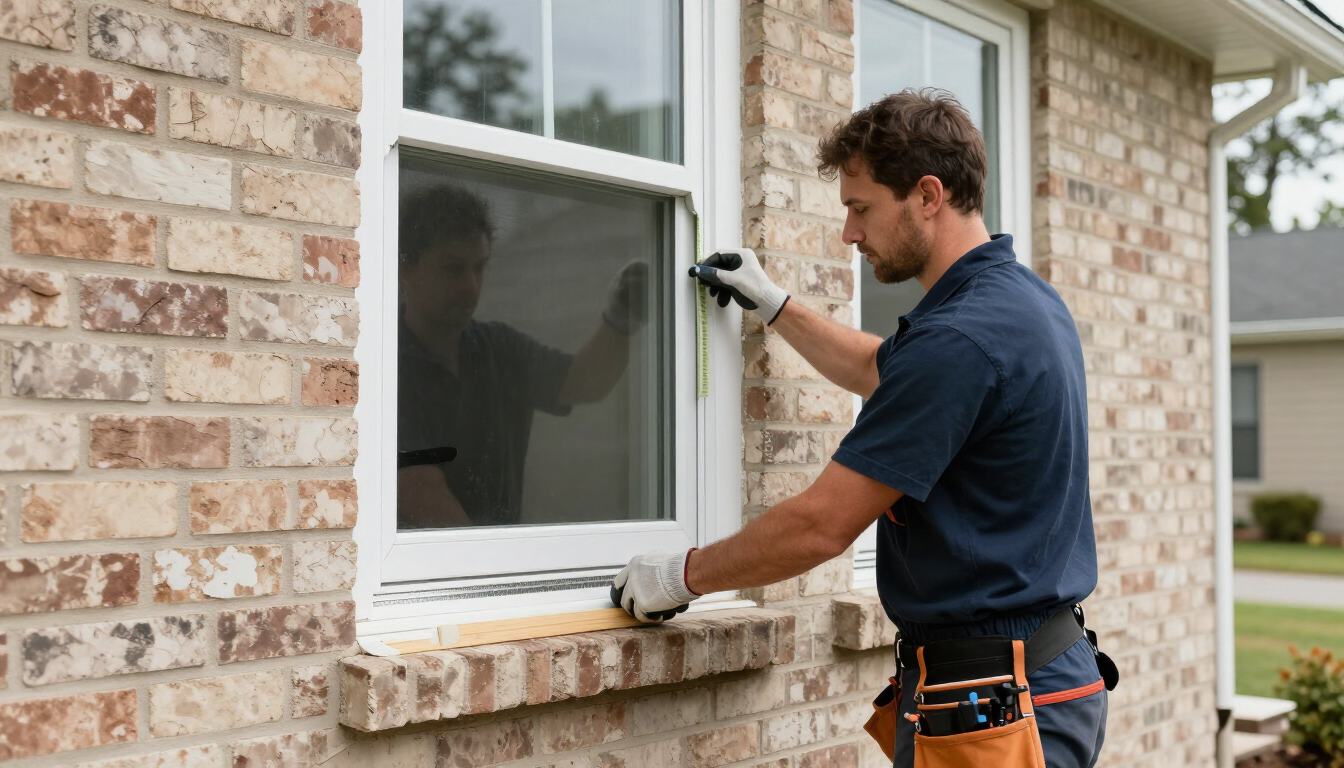
A high-performing window can underperform if the opening is not prepared correctly. Installation should create a continuous water-management and air-sealing system between the window, wall, and exterior cladding.
Ask how the installer will handle:
- Removal of old trim and inspection for rot or water damage.
- Sill preparation, pan flashing, and end dams where appropriate.
- Integration with housewrap, weather-resistive barriers, and siding.
- Low-expansion foam or another suitable air-sealing method.
- Exterior sealant joints that allow drainage rather than trapping water.
- Interior trim, insulation, operation, and final cleanup.
Flashing details are particularly important in North Carolina, where wind-driven rain and humid conditions can expose small installation defects. The contractor should explain the water path, not merely promise that the unit will be “caulked in.”
What should you ask for when comparing quotes?
Use this checklist during consultations. Ask each contractor to provide the same information so you can compare products and labor fairly.
- Which NFRC-certified U-factor, SHGC, VT, and air-leakage ratings apply to this exact window or door size?
- Does the recommendation meet an appropriate current ENERGY STAR South-Central benchmark?
- What Low-E coating, gas fill, spacer, frame, and operating style are included?
- How will the crew inspect, flash, drain, and air-seal every opening?
- What warranty covers the glass seal, frame, hardware, labor, and water intrusion?
Also ask whether the quote includes disposal, interior trim repair, exterior casing, permits where required, and treatment of hidden rot. A low initial price may not include the work needed for a durable installation.
Homeowners replacing exterior doors can compare options through our door replacement resource . If you are evaluating several contractors, Get Free Quotes can help you organize the next step.
Frequently asked questions
Is a lower U-factor always better in North Carolina?
Lower U-factor generally improves insulation and winter comfort, but it should be evaluated with SHGC, VT, air leakage, orientation, and price. The best specification is a balanced package suited to the home, not the lowest isolated number.
What SHGC is best for a North Carolina window?
There is no single ideal SHGC for every elevation. A lower SHGC often helps on sunny, exposed windows, especially west-facing glass. Shaded windows may benefit from more solar gain and daylight. Use the home’s orientation and shading to guide the choice.
Are triple-pane windows necessary in North Carolina?
Not usually. Quality double-pane windows with Low-E glass, argon, warm-edge spacers, and careful installation can perform very well. Triple-pane units may be worth considering for unusually exposed rooms, noise concerns, or a high-performance remodel, but compare the added cost and weight.
Can new windows stop all condensation?
No. Better windows can keep interior glass warmer, but indoor humidity, ventilation, curtains, air movement, and building conditions also affect condensation. Persistent moisture should be investigated rather than covered up.
The practical takeaway
For most North Carolina homes, start with a balanced window or door package: low U-factor, controlled SHGC, useful VT, Low-E glass, argon, and warm-edge spacers. Use NFRC labels to compare complete products, then give equal attention to flashing, drainage, air sealing, and workmanship. Consider orientation, shade, humidity, and room comfort instead of choosing a rating in isolation. When requesting quotes, ask for exact performance numbers, installation details, warranties, and included repairs. Then compare equivalent scopes before deciding which contractor and product best fit your home.
Recent Posts